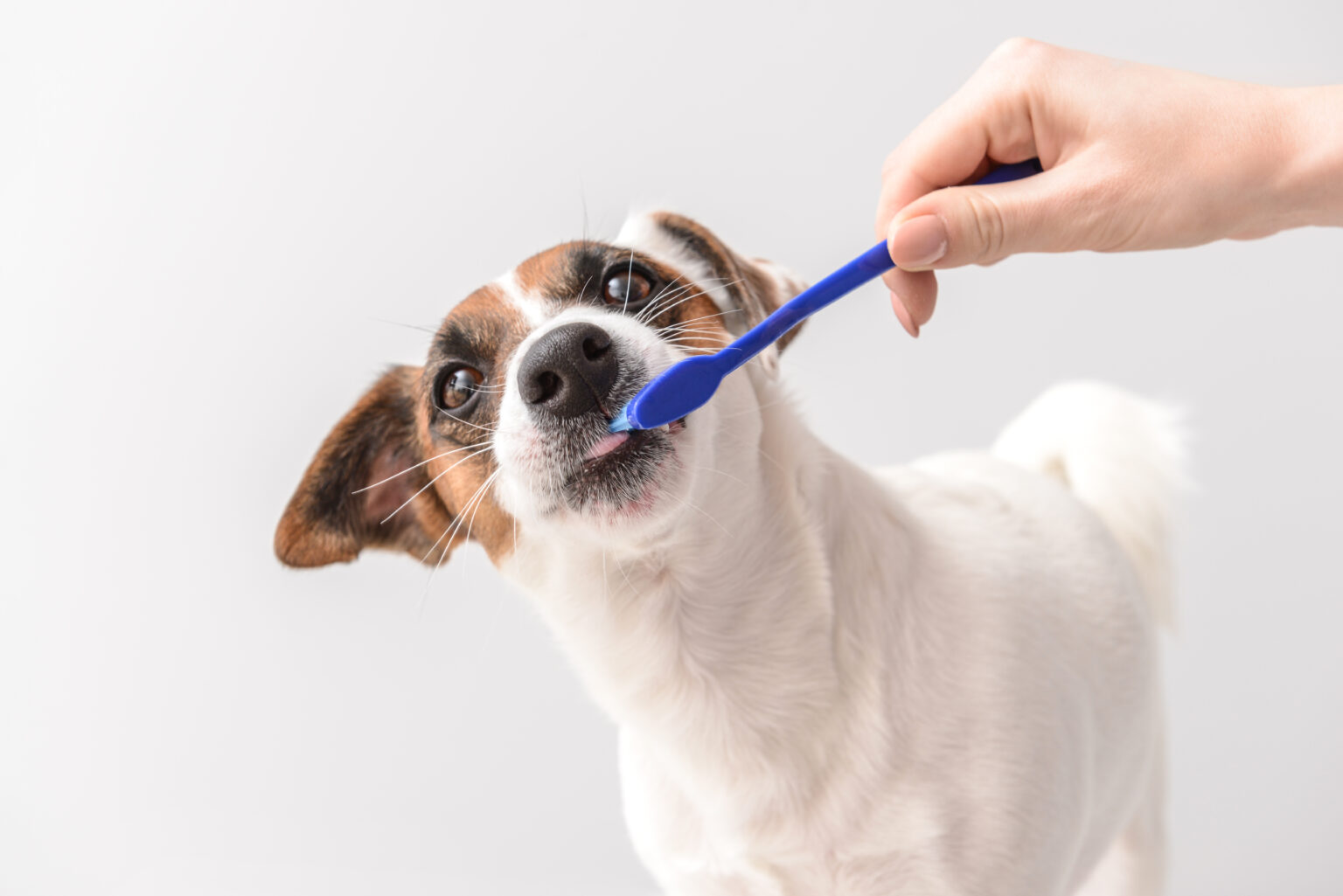
Brushing your pet’s teeth may not be on your to-do list, but it’s a good habit to get into as it will help protect their overall health. Imagine what our mouths would be like if we never brushed?
So, while annual vet dental checks are beneficial, looking after your pet’s gums and teeth regularly at home can have long-term benefits too. Here’s why.
1. Gum disease is common in dogs and cats
Dog and cat saliva is more alkaline than ours, which means the bacteria in their mouth can turn into tartar, then plaque, more easily than for humans. And it’s this build-up of plaque on the teeth that causes gum disease, a problem that typically shows no symptoms at the start, but can escalate to more serious health issues.
2. Regular brushing prevents bad breath
That infamous doggy breath could be another consequence of bacteria building up in your pet’s mouth. This in itself can be a sign of gum disease. But the good news is that brushing your pet’s teeth regularly can help prevent it. Plus, it will reduce the number of vet visits for dental cleaning.
3. A dental routine promotes overall health
If left untreated, bacteria in the mouth can travel to the bloodstream and negatively impact your pet’s immune function. In severe cases, this can even result in health issues like heart disease or diabetes. Another good reason for brushing.
4. It’s hard to tell if your pet is in pain
Cats and dogs don’t express pain the way we do, so it can be tricky to know if inflammation in their mouth is causing them discomfort, as hiding pain or distress comes from a survival instinct in many animals.
So, while there’s no need to worry, it’s important to know that brushing will not only avoid complications but possibly even contribute to your pet enjoying a healthy, long life.
Don’t know where to start?
Introduce cat or dog toothpaste as a treat initially. Apply it with your finger (so your pet gets used to having their mouth touched) and change to a pet toothbrush when they’re ready. Then it’s just a matter of brushing your pet’s teeth as often as possible (for some, this may be daily, while for others, it may be every other day). Dog chews and dog dental treats can also help look after your dog’s mouth, but remember, they are not a substitute for brushing.
Last but not least, our dental guide for cats and dogs is full of useful tips, including how to brush your pet’s teeth.