The back-to-school season can be an unsettling time for dogs. After weeks or months of having more company at home, a sudden change in routine can leave them feeling nervous and may contribute to separation anxiety. The good news is that there are ways to help your dog adjust to their new situation and feel more confident spending time alone. Here are some practical tips to help.
What causes separation anxiety in dogs?
Dogs are social animals, so it’s natural for them to enjoy spending time with people. However, some dogs can struggle when they’re left alone, particularly if they haven’t had the chance to learn that being alone is okay. This can cause them to become anxious if you’re gone for too long. Similarly, dogs enjoy having a routine – knowing what to expect helps them feel safe – so whenever there is a change that disrupts this, anxiety can start to emerge.
How long your dog can comfortably be left alone depends on their age, personality and how used they are to spending time by themselves. As a general guide, dogs shouldn’t routinely be left alone for more than four hours, while younger puppies will usually need more frequent toilet breaks and company. If you’re out for longer, ask a friend, dog walker or sitter to pop in.
Signs of separation anxiety in dogs
Separation anxiety can look different from dog to dog, but common signs include:
- Becoming distressed when you prepare to leave or are out of sight.
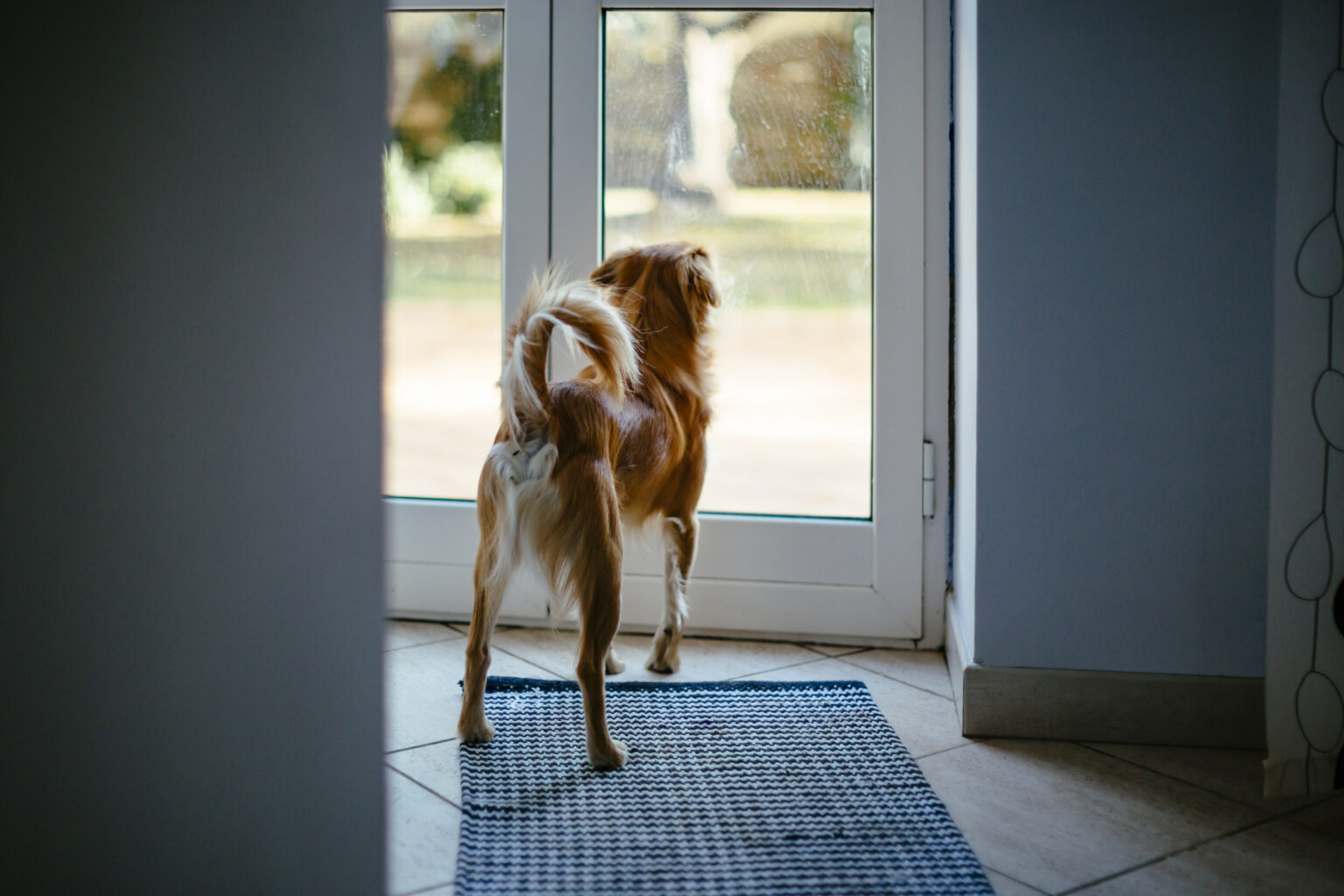
- Hanging around doors, exits or where they last saw you.
- Whining, barking or howling, particularly when you’re away.
- Destructive behaviour, such as chewing, scratching or trying to escape.
- Ignoring food or treats they would normally enjoy.
- Excessive yawning, pacing, or panting.
How to manage separation anxiety in dogs
If your dog is showing mild signs of stress when left alone, there are steps you can take to help them feel more at ease.
Build their confidence early on
Learning how to help a puppy feel comfortable being alone can take time, but gradually building their confidence can help them develop a greater sense of security as they grow. Here are some steps you can follow:
- Walk away, but stay in the same room. If they stay where they are and remain relaxed, go back to them and reward them with a dog treat.
- Leave the room for a few seconds. Again, if they remain where they are and seem relaxed, go back into the room and reward them.
- Repeat leaving the room a few times, gradually increasing the time you’re out of the room to a few minutes and up to half an hour. Reward them every time you come back. Leaving a stuffed KONG toy with them is a great way to distract them and reward them at the same time.
- If working from home, try spending some time in a separate room during part of your day.
- Leave the house for a few minutes and repeat. When they remain calm, praise them or offer a reward – this will help create a positive association with being alone.
During this practice, shorten the time your dog is left alone if you see they’re becoming very anxious. The key is to introduce these steps slowly.
For dogs with established or severe separation anxiety, speaking to your vet or a qualified behaviourist may be a better solution than trying to push through the problem alone.
Offer mentally stimulating toys
Introducing an interactive toy or puzzle game can help teach some independence while also encouraging problem-solving and keeping the mind active. Tough toys, appropriately sized for your dog, can also provide a safe outlet for chewing and play.
An automatic feeder, while not a toy, can also help maintain your dog’s usual mealtimes when your back-to-school routine gets busier.
Encourage independence
Making a fuss every time you leave your dog alone is not recommended. If you treat the situation as calmly as you can, your dog is more likely to feel calm as well. The same rings true if you come home and find they’ve been destructive in your absence. Your dog won’t understand that being punished when you get home is because of something they did while you were away. In fact, this could lead to them becoming even more anxious. Positive reinforcement, praise and rewards are a far more effective approach.
Create a safe space
Giving your dog a cosy area where they can relax, such as a quiet corner or an open crate (if they’re already comfortable using one) with their bed, a blanket and some of their favourite toys, can provide a safe space to retreat to when they need some peace and quiet. Remember, never shut a dog in a crate against their will, as this will only create more fear and anxiety. Instead, leave it open so they can come and go.
Consider a natural calming solution
Calming products for dogs, such as pheromone diffusers or collars, can provide an additional source of support during stressful situations. Some owners find they’re useful during events like fireworks, or when guests are over. However, while these products may help some dogs feel more settled, they shouldn’t be relied on as a treatment for separation anxiety on their own. If your dog is struggling, speak to your vet about the best approach.
Veterinary support
When put into practice, we find these tips can help, but don’t feel that you have to tackle it yourself if your dog continues to show signs of separation anxiety. Your vet is there to help rule out any underlying medical issues and recommend the right behavioural support.
Separation anxiety can take time to overcome, but with the right approach, many dogs can learn to feel more comfortable when they’re alone.