Tackling dog grooming at home can seem like a major undertaking. And it can feel pretty daunting at first, but not if you know how. Our step-by-step guide, full of tips and tricks, will make it both easy and deeply satisfying. After all, keeping your dog in tip-top shape isn’t just about how they look, it’s also about how they feel. Plus, when you’re armed with the right dog grooming tools and equipment, it’s a great money-saving exercise.
In recent years, dog grooming has evolved beyond simple coat trimming. Many groomers now focus on wellness grooming, an approach that prioritises skin health, gentle products, and low-stress experiences to support a dog’s overall wellbeing. So if, like us, you like the sound of that, we’ve incorporated these principles into our guide. A happy and healthy dog is always the goal.
This guide will walk you through everything you need to groom your dog at home, from choosing the right dog grooming brush to safely cutting your dog’s nails. Let’s get started.
Essential dog grooming tools
Before you begin grooming your dog at home, it helps to have the right tools ready. We like to invest in good-quality equipment whenever possible, as it makes grooming easier, safer, and more comfortable for your dog.
You’ll need:
- Dog grooming brush
- Dog grooming nail clippers
- Dog grooming hair clippers
- Dog shampoo and conditioner
- Microfibre towels
Now, we’ll break down each part of your dog’s grooming session, so you can learn about the key steps, frequency and vet-recommended products that our dogs love.
Coat brushing
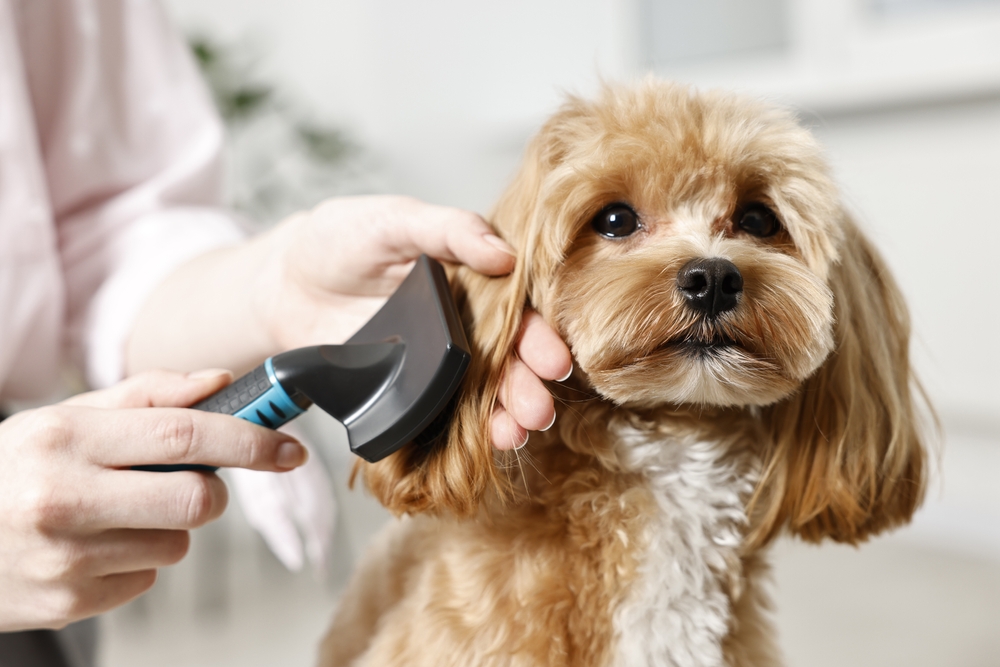
Brushing is one of the simplest yet most important parts of dog grooming. Regular brushing removes dirt, loose fur, and tangles while distributing the natural oils on your dog’s skin throughout their coat, which helps create a healthy shine.
Choosing the right dog brush
The best dog grooming brush will depend on your dog’s coat, so choosing the right one is often easier than you think.
- Slicker brushes are ideal for long-haired breeds, helping to detangle fur and remove loose hair
- Bristle brushes are best for short-haired breeds
- Undercoat rakes are particularly useful for thick, double coats during shedding seasons
Always brush gently and work slowly through knots to avoid pulling on the skin.
How often should I brush my dog’s coat?
As with choosing a dog brush, your dog’s coat type will determine the ideal frequency:
- Short-haired dogs can be brushed once or twice a week
- Medium coats need brushing two to three times a week
- Long-haired or double-coated breeds will benefit from daily brushing
It helps to remember, brushing reduces shedding around the home, prevents painful mats from forming close to the skin, and is a great opportunity to bond with your dog while checking for cuts, sores or skin irritation.
Bathing your dog
Bath time is a key part of dog grooming, especially for adventurous dogs who love getting dirty, rolling in poo (we’ve been there) or going on muddy walks.
Always use a shampoo formulated for dogs, as our canine friends have sensitive skin and a pH balance from us. Human shampoo often contains ingredients like sulphates or fragrances, which can be harsh on dogs’ skin and cause irritation.
Bath time is also a great opportunity to clean your dog’s eyes, using a damp cotton pad to wipe away any debris. However, cleaning your dog’s ears should only be done when advised by your vet.
How often should I wash my dog?
Most dogs only need a dog bath every 1-3 months, although this can vary depending on their coat type, lifestyle, and whether they have a skin condition.
Washing too frequently can strip the natural oils from your dog’s skin, causing dryness and irritation, so it’s best to err on the side of caution.
Choosing the right dog shampoo
When choosing a dog shampoo, consider your dog’s coat type, lifestyle and whether they have sensitive skin. Here are some of the tried-and-tested brands we can vouch for.
For everyday grooming
- Animology All Breed Dog Body Shampoo – A great all-round shampoo suitable for most coat types
- Burt’s Bees Oatmeal Dog Shampoo – A popular option known for its naturally derived ingredients
- Douxo S3 CALM Shampoo – Ideal for dogs with dry, itchy skin, helping to calm irritation
- Animology Flea & Tick Shampoo for Dogs – Designed to help wash away fleas and ticks
For muddy dogs
If your dog regularly returns from walks covered in mud, look for shampoos designed for deep cleaning while still being gentle on the skin. Products marketed for muddy or outdoor dogs often include deodorising ingredients and coat conditioners to help remove dirt without stripping oils.
- Bugalugs Stinky Dog helps remove faeces and strong odours using gentle odour neutralisers and eucalyptol oil, a naturally anti-bacterial ingredient.
- Animology Fox Poo features an easy-rinse, gentle formula that removes strong odours, slime and poo.
For puppies
Puppies have particularly sensitive skin, so mild formulas that are pH-balanced are best. The options below are designed to clean gently without irritating delicate skin.
- Animology Mucky Pup No Rinse Shampoo – Suitable for puppies from 6 weeks old. A gentle spray formula with built-in conditioner.
- Burt’s Bees Tearless 2 in 1 Shampoo and Conditioner – Made with buttermilk and linseed oil to soothe the skin, plus honey to condition the coat.
- Animology Puppy Love Shampoo – An easy-rise formula that removes dirt and odour without stripping essential oils from the coat.
Medicated dog shampoo
If your dog has skin issues such as itching, infections, or allergies, a vet may recommend a medicated shampoo specifically formulated for dogs.
Our resident vet recommends Coatex Medicated Dog Shampoo, an antibacterial and antifungal formula that can help treat flaky, greasy or irritated skin.
Always consult your vet before using medicated dog products.
Nail clipping and hair trimming
Beyond brushing and bathing, trimming and nail care are also essential parts of a solid grooming routine, as they help keep your dog comfortable and looking tidy.
Choosing dog grooming clippers
If your pup needs regular trims, quality hair clippers for dog grooming can help maintain coat length between professional appointments. This is particularly useful for breeds that need regular coat maintenance.
When choosing dog hair clippers, look for:
- Low vibration and quiet motors
- Adjustable blades or guard combs
- Cordless options for easier handling
Start slowly and allow your dog to get used to the sound before trimming their coat. The Wahl Multi Cut Mains Pet Clipper, while mains-operated, is a versatile option with an ergonomic design that makes it comfortable and easy to handle.
Cutting dogs’ nails safely
Keeping nails short is beneficial for dogs for many reasons. It prevents discomfort, joint strain, accidental scratching and posture issues.
There are three main types of dog toenail clippers. Choose one that feels comfortable to you.
- Scissor-style nail clippers offer excellent control, making them popular with beginners.
- Guillotine nail clippers have a hole where the nail is inserted before the blade cuts through.
- Nail grinders gradually file the nail down instead of cutting it.
The Wahl E-Z Pet Nail Clipper & File is an option we recommend, as it combines scissor-style clippers with an integrated file and has rubber grip handles, making it easy to use.
To cut your dog’s nails:
- Hold your dog’s paw and apply gentle pressure to extend the nail
- Trim small amounts at a time, avoiding the pink vein known as “quick” (the blood vessel inside your dog’s nail)
Grooming as a positive experience
The most successful grooming routines are calm and positive for both dog and owner. Here are our top dog grooming tips for a happy grooming session:
- Start early if you have a puppy, so they get used to the process
- Use dog treats and lick mats to keep your pet busy
- Keep sessions short at first and gradually increase the time
- Create a quiet grooming space free from noise and distractions
Use lots of positive reinforcement like praise to reward calm behaviour. If your dog becomes anxious, take a break and try again later.
Grooming should never feel like a struggle. Instead, it’s a valuable opportunity to connect and spend quality time with your dog while supporting their health and wellbeing.